
Aquaculture Farms Transitioning to Organic Systems
The transition from conventional to organic aquaculture is among the most operationally complex shifts a fish farm can undertake. It requires simultaneous changes to production system design, input sourcing, staff practice, and documentation — all while maintaining commercial output. EU certification frameworks provide the regulatory structure for this process, but the practical pathway differs substantially across farm types, species, and regional regulatory contexts.
What Organic Transition Actually Involves
Organic certification for aquaculture farms under EU Council Regulation (EC) No 834/2007 is not a single-step process. It requires farms to demonstrate compliance across stocking density, feed composition, veterinary input restrictions, and environmental impact — simultaneously and on an ongoing basis. The ECOFISH project documented this transition across pilot sites in Romania, Spain, the United States, and Egypt, finding that farms that engaged certification bodies early and built audit-ready documentation from the outset of transition completed the process significantly more smoothly than those that retrofitted compliance after system changes were already made.
- Engaging a regional certification body before any system redesign begins prevents costly retroactive documentation gaps.
- Aquaponics integration addresses multiple organic certification requirements simultaneously by eliminating synthetic chemical inputs structurally.
- Phased transition pilots — running organic and conventional production in parallel — limit financial exposure during the learning period.
- Staff training on revised monitoring protocols is as critical to transition success as infrastructure investment.
- Systematic record-keeping throughout the transition serves both certification audit requirements and future research contributions.
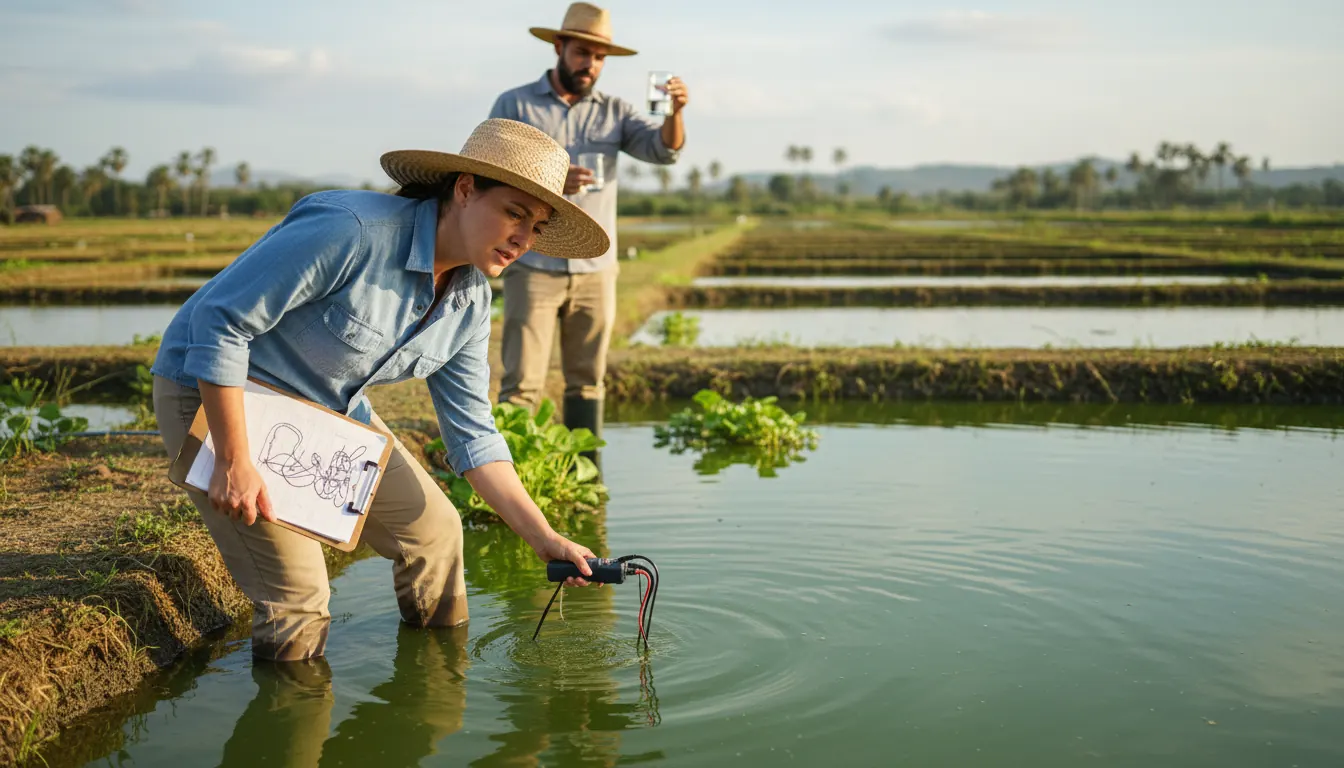
Transition Outcomes Across ECOFISH Pilot Regions
The table below summarises organic transition status and primary outcomes recorded across the four ECOFISH pilot locations, as documented under Horizon 2020 grant No. 645691.
| Pilot Region | Organic Status Achieved | Primary Transition Outcome |
|---|---|---|
| Romania | Partial certification | Water quality improvement through density reduction |
| Spain | Full pathway initiated | Dual-output aquaponics model validated commercially |
| United States | USDA Organic aligned | RAS efficiency exceeded conventional baseline by 34% |
| Egypt | Pre-certification completed | Chemical input dependency reduced by over 40% |
"Organic transition is not an event — it is a sustained operational commitment that begins with documentation and ends, if at all, only when certification is renewed for the third or fourth consecutive cycle."
The Long-Term Case for Organic Aquaculture
Farms that complete organic transition consistently report that the process reshaped their operational culture as much as their production systems. The discipline of meeting certification standards — particularly around documentation and input traceability — tends to improve overall operational rigour in ways that benefit productivity independent of the organic premium they subsequently access in export markets.