
Aquaculture Fish Farming for Sustainable Food Production
Aquaculture fish farming has become a structural component of global food security planning, not merely a supplement to wild capture fisheries. As marine stocks face sustained pressure from overfishing and climate-related habitat change, the capacity of well-managed fish farms to produce protein efficiently and with a reduced environmental footprint has moved from a niche concern to a mainstream policy priority across the European Union and beyond.
Production Methods Supporting Sustainable Outcomes
The environmental performance of aquaculture fish farming varies considerably by system type. Conventional pond systems, while widely used, typically carry higher water consumption and chemical input burdens than recirculating or aquaponics-based alternatives. The shift toward closed-loop production — where water is filtered and reused rather than discharged — has significantly improved the sustainability profile of farms willing to invest in infrastructure redesign. Organic certification frameworks provide the regulatory architecture that makes these improvements verifiable and market-legible.
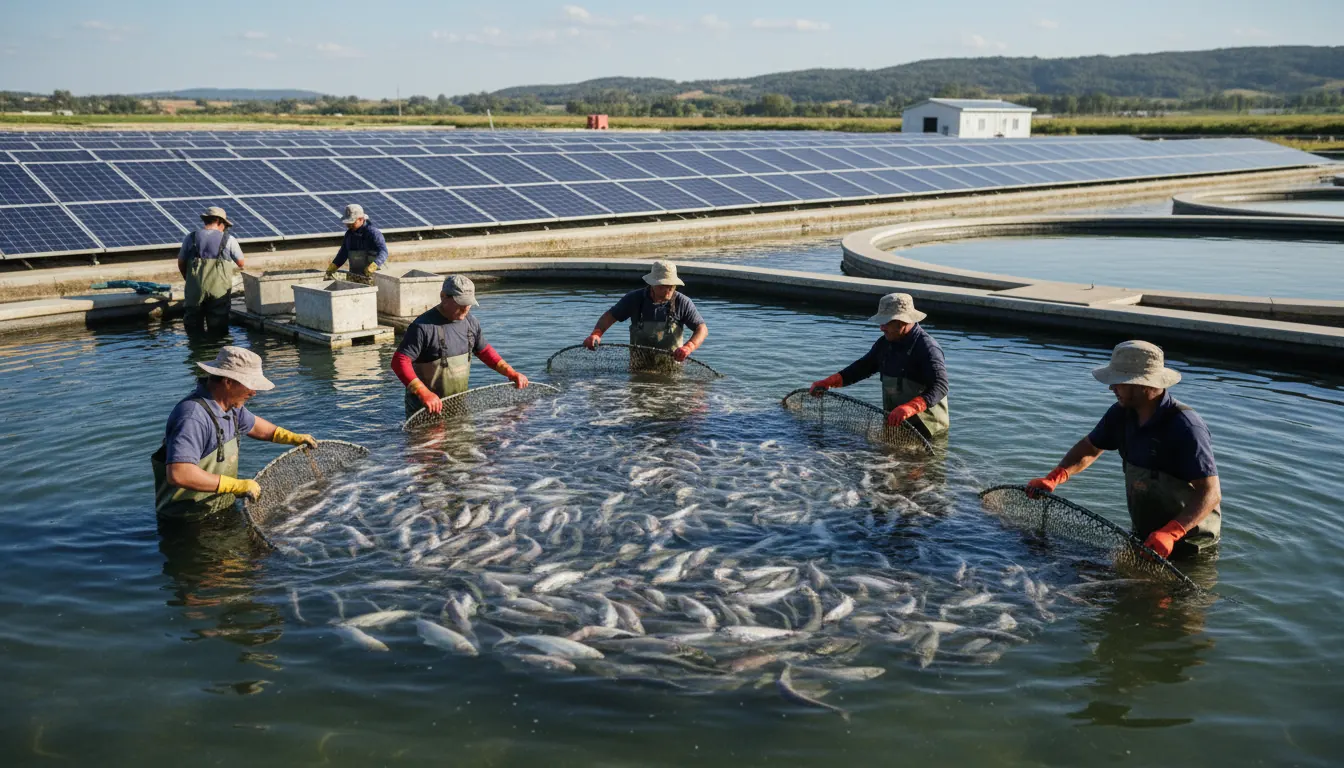
- Recirculating aquaculture systems reduce water consumption per kilogram of fish produced by up to 90% relative to open pond baselines.
- Organic certification under EU Council Regulation (EC) No 834/2007 establishes verifiable standards for feed, stocking density, and veterinary inputs.
- Aquaponics integration generates dual outputs — fish protein and plant matter — improving overall resource efficiency within the same production footprint.
- Feed conversion ratio optimisation through adjusted feeding regimes measurably reduces waste across production cycles.
System Efficiency at a Glance
The table below compares key sustainability indicators across three primary aquaculture fish farming system types currently in commercial operation.
| System Type | Water Efficiency | Organic Compatibility |
|---|---|---|
| Conventional Pond | Low | Limited without reform |
| Recirculating System | Very High | Compatible with adaptation |
| Aquaponics | Very High | Strongly compatible |
"The farms that will define sustainable food production in the next decade are not the largest ones — they are the ones that have built the most rigorous relationship between their inputs and their outputs."
Positioning Aquaculture Within Food Security Strategy
Policymakers and food system planners increasingly treat responsible aquaculture fish farming as an essential rather than optional component of national protein supply strategies. The evidence base supporting this position — including findings from research programmes such as ECOFISH — continues to strengthen, particularly as the cost gap between sustainable and conventional production narrows with technology adoption and regulatory normalisation.