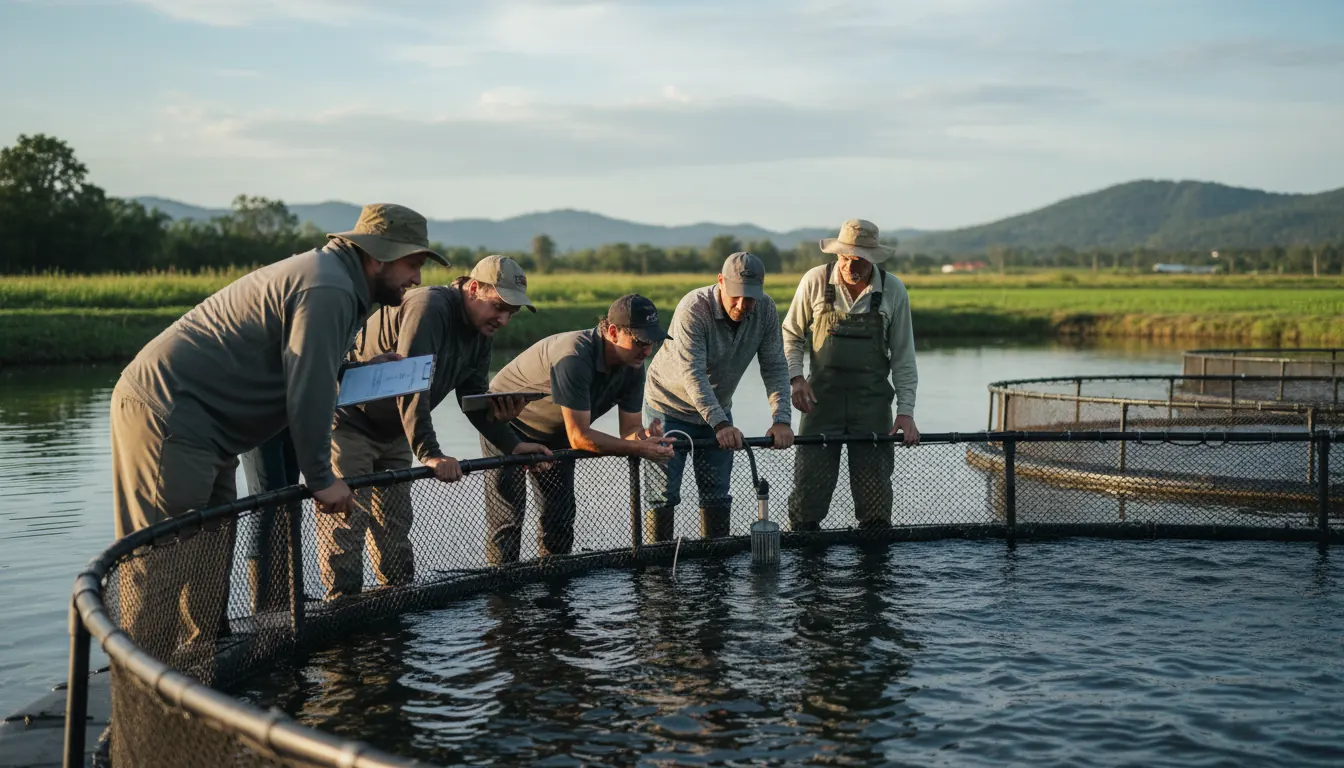
Aquaculture Research Driving Innovation in Fish Farming
Aquaculture research has moved well beyond documenting production problems. The current generation of funded research programmes — including those operating under the EU Horizon 2020 framework — is generating deployable innovation in recirculating system design, organic feed formulation, aquaponics integration, and digital monitoring infrastructure. These advances are reaching operating farms faster than previous research cycles, in part because the programmes themselves are structured around pilot sites embedded within real production environments rather than isolated laboratory conditions.
Technology-Led Advances Across Production Systems
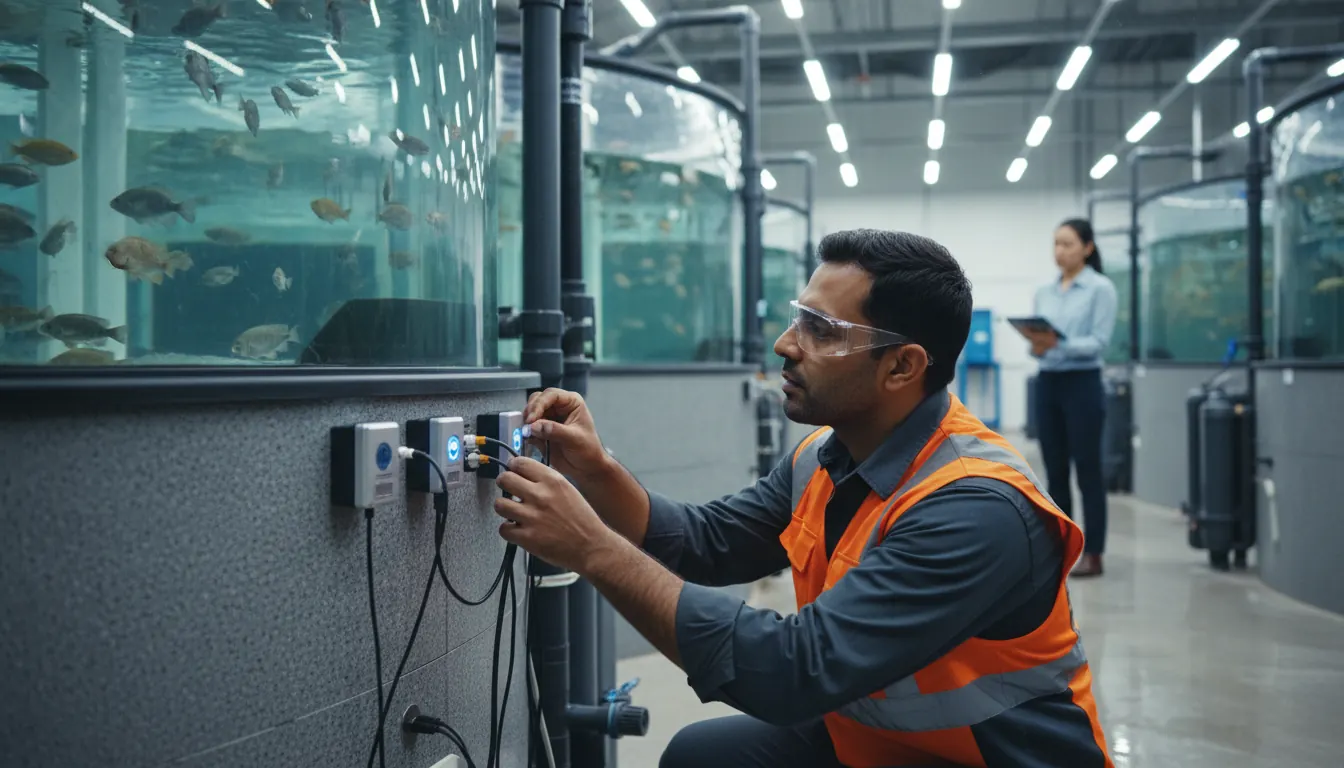
Recirculating aquaculture systems represent the most technology-intensive end of the innovation spectrum currently accessible to commercial farms. Sensor arrays monitoring dissolved oxygen, ammonia, pH, and water temperature in real time — combined with automated feeding systems that adjust delivery rates based on biomass and behavioural data — have reduced labour input and improved feed conversion simultaneously at ECOFISH pilot sites in the United States. These are not experimental technologies; they are operational tools already in use at commercial scale in facilities that made the infrastructure investment three to five years ago.
- Real-time water quality sensors reduce manual monitoring burden while improving early detection of biological stress events.
- Automated feeding systems calibrated to biomass estimates cut feed wastage by measurable margins across production cycles.
- Aquaponics research has produced new crop-fish pairing recommendations that optimise nutrient cycling and dual-output value.
- Organic feed formulation research has identified viable synthetic-free alternatives that meet certification requirements without yield penalty.
Innovation Outcomes Across ECOFISH Pilot Sites
The table below summarises the primary technology-led innovations documented across the four ECOFISH research regions during the project period, as recorded under Horizon 2020 grant No. 645691.
| Pilot Region | Primary Innovation | Documented Outcome |
|---|---|---|
| Romania | Organic pond management protocol | Stocking density optimisation improved water indices |
| Spain | Aquaponics system integration | Commercial dual-output viability demonstrated |
| United States | RAS sensor and automation suite | 34% efficiency gain over conventional baseline |
| Egypt | Feed reformulation programme | Chemical input dependency cut by over 40% |
"The most significant innovations in aquaculture are not the dramatic ones — they are the incremental improvements in monitoring, feeding, and water management that compound quietly across every production cycle."
From Research to Farm-Level Adoption
The gap between aquaculture research output and farm-level adoption has historically been wide. Programmes structured around embedded pilot sites — where researchers work within operating farms rather than alongside them — have demonstrated a measurably shorter translation timeline. The ECOFISH model, with its four regionally distinct pilot environments, represents one of the more successful recent examples of research designed from the outset to produce findings that operators can actually implement without institutional intermediaries.