
Sustainable Fish Farms Inspired by Casino Data Analytics Systems
The data infrastructure behind modern online casino platforms — built to process millions of transactions and surface actionable patterns in real time — has quietly informed how forward-looking sustainable fish farms approach operational analytics. Where casino systems track player behaviour across thousands of concurrent sessions, aquaculture analytics platforms now track biological and environmental variables across full production cycles, using comparable statistical architectures to improve forecasting precision and resource efficiency.
What Aquaculture Can Learn From Casino Analytics
Online casino operators invested heavily in data analytics infrastructure because their margins depend on understanding variance at scale. The same logic applies to sustainable fish farms, where small inefficiencies in feed conversion, water use, or stocking density compound across production cycles into significant cost and yield differentials. Farms that have adopted continuous monitoring and machine learning-assisted forecasting report measurably improved resource allocation — particularly in recirculating aquaculture systems where parameter control is tightest.
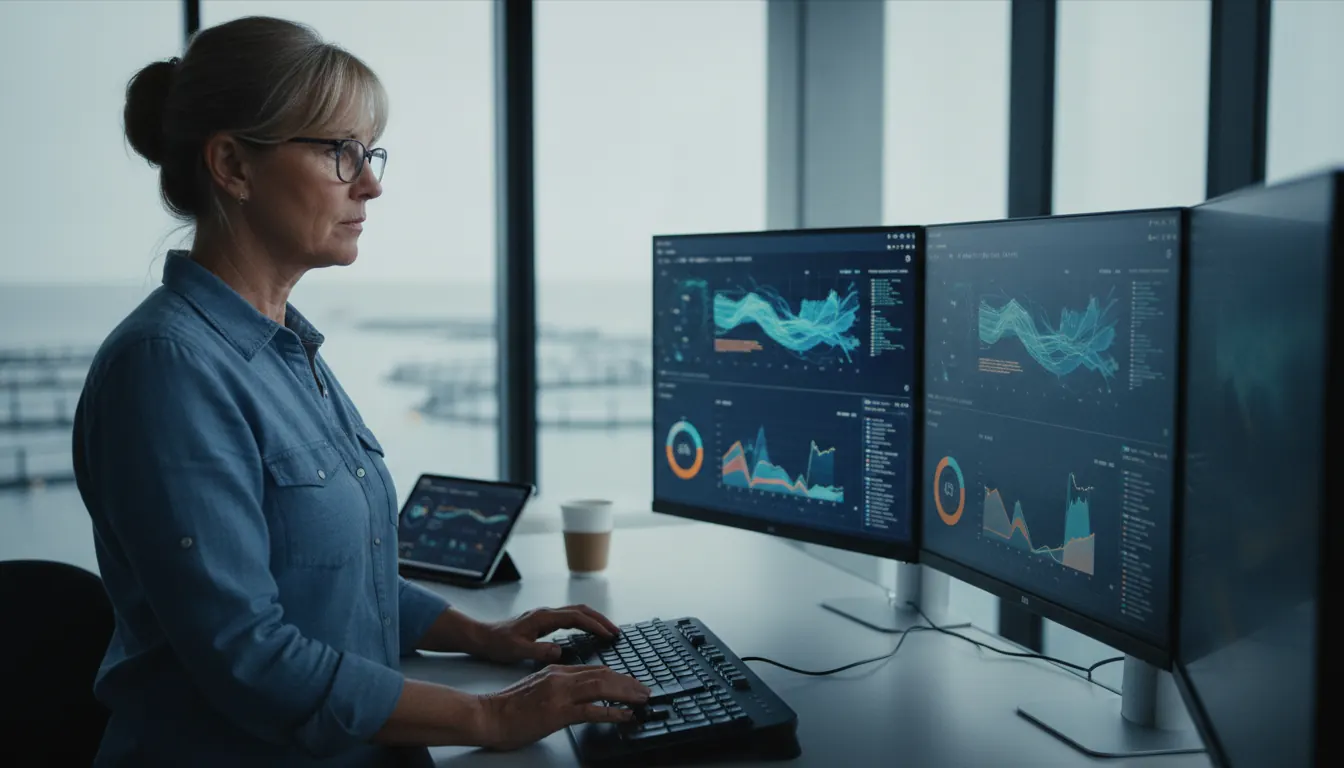
- Real-time sensor integration allows farm managers to detect water quality deviations before they affect fish health indicators.
- Predictive yield modelling based on historical production data reduces over-stocking and feed wastage across cycles.
- Anomaly detection algorithms flag outlier readings that would previously have gone unnoticed until production loss occurred.
- Resource allocation dashboards consolidate energy, water, and feed consumption into a single operational view.
Analytics Performance Compared
The following comparison illustrates how data analytics functions differently — and similarly — across casino platforms and sustainable fish farm management systems.
| Analytics Function | Sustainable Fish Farms | Casino Platforms |
|---|---|---|
| Data collection frequency | Continuous sensor streams | Real-time transaction logs |
| Primary output | Yield and resource forecasts | Revenue and risk projections |
| Anomaly response | Automated feed or aeration adjustment | Automated limit or alert trigger |
| Reporting cadence | Daily production summaries | Hourly financial reporting |
"The farms achieving the strongest efficiency gains are not the ones with the most sensors — they are the ones that have built the analytical culture to act on what those sensors tell them."
Building an Analytics-Driven Farm Operation
Transitioning to an analytics-led operational model does not require casino-scale investment. The foundational step is establishing clean, consistent baseline data across water quality, feed input, and biomass growth — the equivalent of a casino's transaction ledger. From that foundation, pattern recognition becomes possible, and the compounding value of data-informed decisions grows with each production cycle completed under the new framework.