
What Fish Farming Is And How To Build A Business Around It
Fish farming sounds easy until you stand by your first pond. Then you notice how many small choices decide the outcome. People raise fish in tanks, ponds, cages, or closed systems. Some do it for food, some for income, and many for both. The appeal makes sense. Demand for fish keeps growing, the land you need is often small, and a well-run farm can repay your effort. Yet keeping fish alive and running a real business around them are two very different skills.
A big part of that gap is guessing what comes next. Anyone who has tried to predict an outcome knows how fast confidence meets reality. You see the same urge to forecast everywhere, from a college baseball bracket breakdown to interactive platforms like rollambia, where the fun lies in guessing the next result. A fish farmer faces that same uncertainty every cycle. You stock young fish now and hope the market, the weather, and the water all cooperate months later.
What People Really Mean When They Talk About Fish Farming
When someone asks what is fish farming, the honest answer is broad. At its heart, it means raising water animals under your control instead of catching them in the wild. That control can be loose or tight. A simple backyard pond counts, and so does a high-tech indoor system, even though they feel worlds apart.
The method you pick shapes everything else. It decides your costs, your daily routine, and which fish you can realistically raise.
| System Type | Setup Cost | Best For | Main Challenge |
|---|---|---|---|
| Earthen pond | Low | Beginners, rural land | Water and disease control |
| Cage culture | Medium | Lakes, reservoirs | Site access and theft |
| Tank system | Medium | Small plots, towns | Constant aeration |
| Recirculating (RAS) | High | Indoor, urban farms | Technical complexity |
Each path suits a different person. Ponds forgive your mistakes slowly. Indoor systems punish them within hours. So knowing yourself matters as much as knowing your fish.
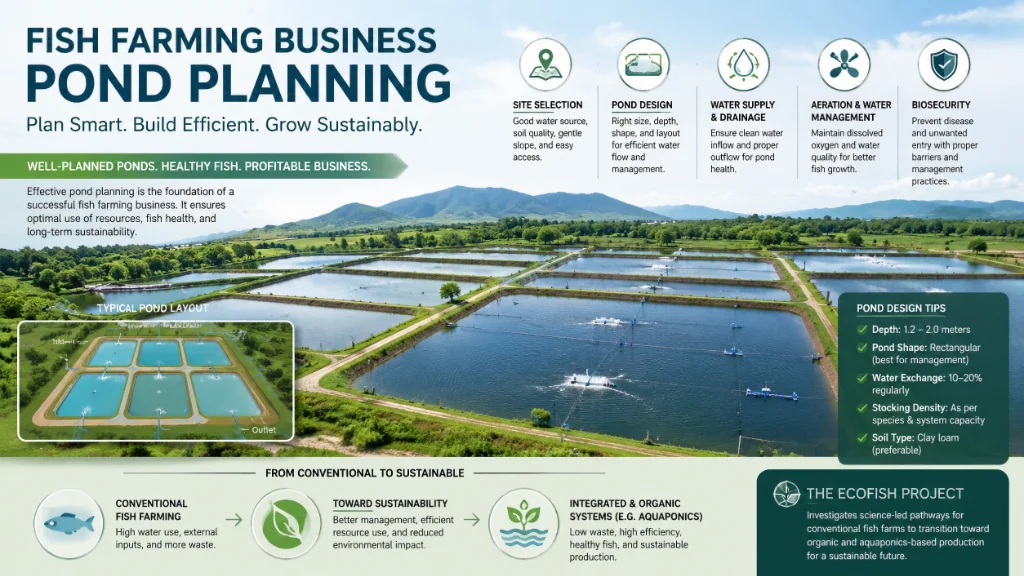
Turning A Fish Farming Business Into A Workable Plan
A fish farming business starts long before the first young fish arrives. It begins with honest questions about money, time, and the people you want to sell to. Many promising farms stall for a simple reason. The fish did fine, but the plan ignored the slow months between stocking and the first real sale.
A solid plan answers a few practical questions before you build anything:
- Which species sells well near you, and at what price
- How much clean water you can secure across a full season
- What you will feed the fish, and whether that supply stays affordable
- Who actually buys your harvest, and how it reaches them
- How long your savings can cover costs before income arrives
- What happens if heat or disease wipes out one batch
These questions feel dull, but they protect you. A farmer who answers them calmly stands in a far stronger position than one chasing a fashionable species with no buyer in sight.
"The people who last in this trade are rarely the ones with the biggest ponds. They are the ones who planned for the bad season before it arrived."
Reading Demand Before You Stock The First Pond
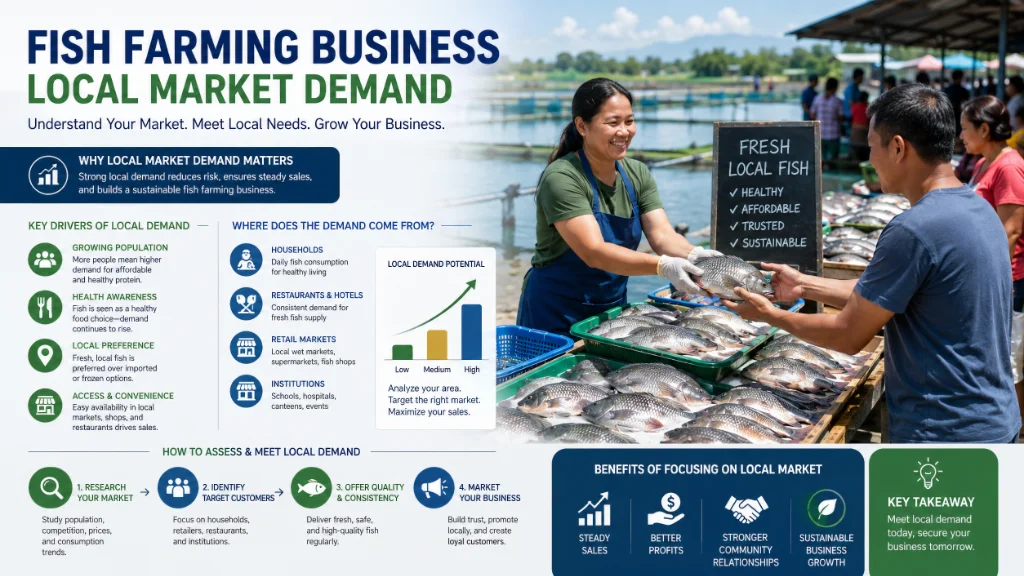
Demand quietly drives every successful fish farm. You can raise a perfect harvest and still struggle if nobody nearby wants it at a fair price. So before you stock, spend real time watching how fish moves through your local market.
Talk to vendors. Visit the market on its busiest days. Notice which species sell out first and which sit there unsold. This patient watching teaches you more than any glossy report.
| Demand Signal | What It Suggests | Smart Response |
|---|---|---|
| Fish sells out by midday | Strong, steady appetite | Stock proven species |
| Prices swing weekly | Unstable or seasonal demand | Start small, test first |
| Few local sellers | Possible gap in supply | Move carefully, confirm interest |
| Buyers ask for one type | Clear preference | Match it before experimenting |
Reading these signs is part instinct and part homework. Farmers who guess well usually earn that instinct by paying attention long before they spend a cent.
"Markets reward the grower who listens. The pond can be flawless, but the buyer decides whether the season was worth it."
Counting The Costs And The Patience The Business Asks For
The numbers in fish farming rarely move in a neat line. Feed is often your biggest running cost, and it rises as the fish grow. Add young stock, water care, labour, and the odd hard loss, and the early budget feels heavier than you expected.
Patience is the cost few people warn you about. Most fish need months to reach market size, and that wait tests both your nerves and your savings. A farmer who expects fast returns often skimps on feed or care, and the harvest suffers for it. Those who treat the first year as a learning season, not a payday, tend to build something that lasts. This business rewards steadiness over speed. The steady operators are usually the ones still standing after a few rough cycles.
Where A Small Fish Farm Fits In A Bigger Food Story
One fish farm can feel tiny next to global food production. Yet these small operations matter more than their size suggests. Wild fish stocks are under real strain, and responsible farms help fill the gap. They bring protein closer to home and create local work that does not lean on distant supply chains.
There is something grounding in the work itself. You feed a system, watch it grow, and learn to read signs that machines still miss. Daily attention ties straight into a much bigger question about how the world will eat.
Conclusion
Fish farming rewards people who respect both the biology and the business behind it. The fish will grow if you let them. The income, though, depends on planning, market sense, and the patience to wait through slow seasons. Start small, watch local demand closely, and treat early mistakes as tuition, not failure. Handled with care, a modest pond can quietly become a dependable living.