
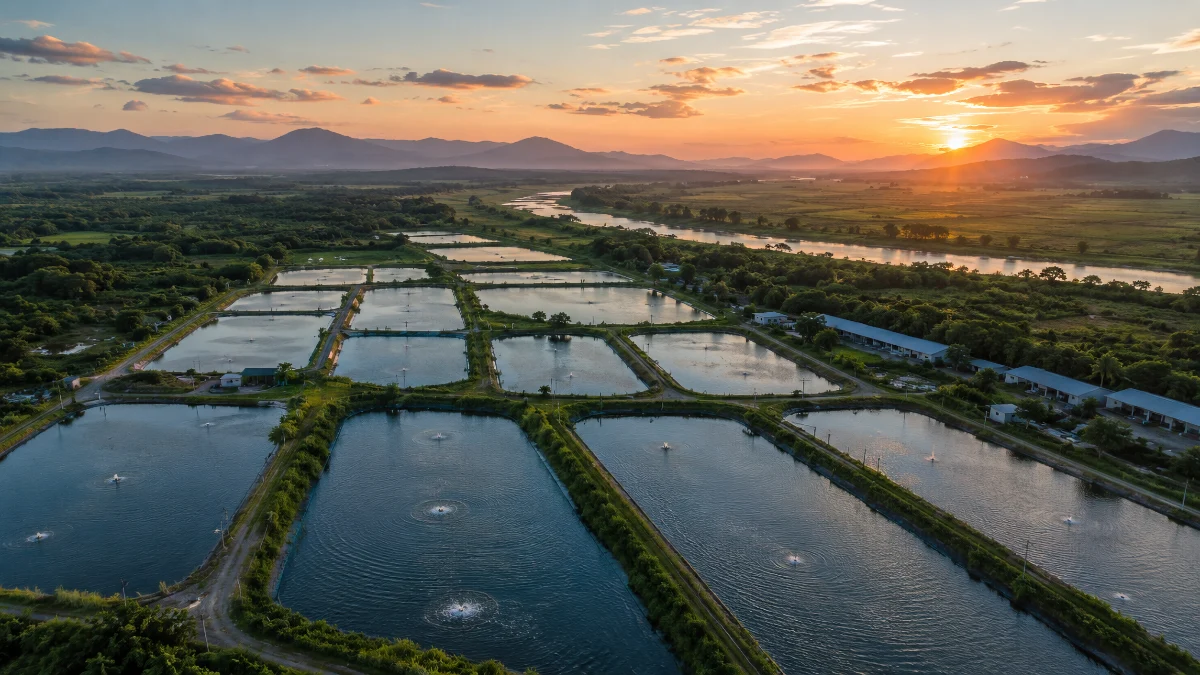
Aquaculture Fish Farming Sustainability and the Ecofish Project
Fish consumption has roughly doubled since the 1980s, and wild capture fisheries cannot absorb that pressure indefinitely. The response from the research community has been measured but consequential — a growing body of work aimed at making farmed fish production less chemically dependent, less wasteful, and ultimately more compatible with the certification frameworks that export markets increasingly demand from aquaculture fish farms.
The Role of Aquaculture Research in Modern Fish Production
Sustainable aquaculture is not a single destination. Different farms, different species, different regulatory climates — each combination produces a different set of constraints and possibilities. What research can do is map those variables systematically, so that individual operators are not left reinventing solutions that others have already tested and documented.
Origins and Objectives of the ECOFISH Project
Launched under the Horizon 2020 programme and supported by Marie Skłodowska-Curie Actions grant No. 645691, the ECOFISH project set out to investigate how conventional fish farms might credibly move toward organic and sustainable production — with aquaponics as the central methodological focus. The ecofish project was structured around a deliberately wide research net: rather than developing one transferable model, it sought to understand why transitions succeed or stall across different farm types, species, and institutional environments. That breadth became one of its more useful contributions to the aquaculture research literature.
Key Challenges Facing Conventional Aquaculture Fish Farms
The problems are well-documented. Intensive pond and cage systems typically rely on prophylactic antibiotics, synthetic feed supplements, and stocking densities that degrade water quality over successive production cycles. None of this is compatible with organic certification, and regulators in both the EU and major export markets are progressively tightening the conditions under which conventional products can be sold. What is less often acknowledged is that many operators already know this — the barrier is not awareness but the absence of practical, financially legible transition pathways suited to their specific situation.
Scope of Aquaculture Fish Farming Across Participating Regions
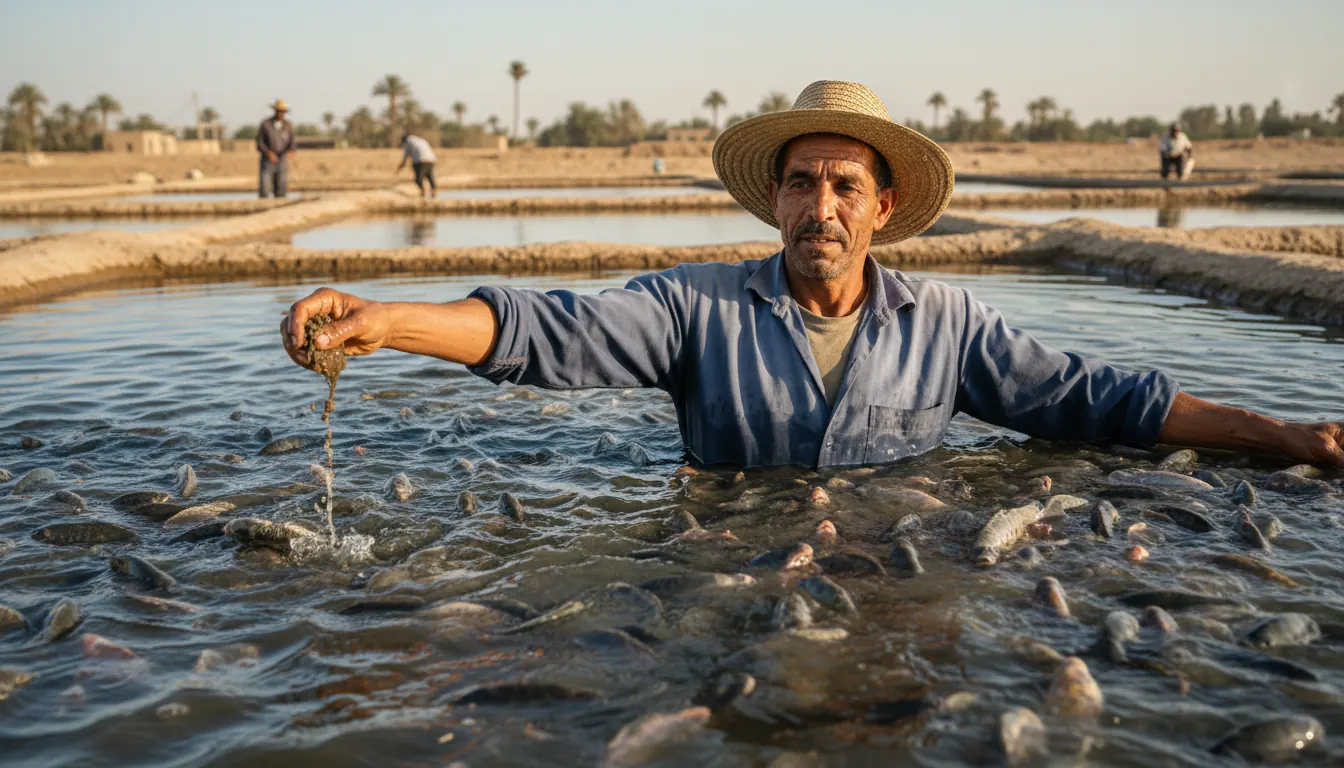
Romania, Spain, the United States, and Egypt each brought a different set of conditions to the ECOFISH framework. Romanian carp production sits within a particular post-socialist agricultural structure that shapes everything from land tenure to subsidy access. Egyptian tilapia farming operates under entirely different input cost structures and export incentives. Treating these as equivalent would have produced findings of limited value; treating them as genuinely distinct allowed the project to identify which transition elements are context-dependent and which appear to hold across settings.
Methodologies Employed in Sustainable Fish Farms
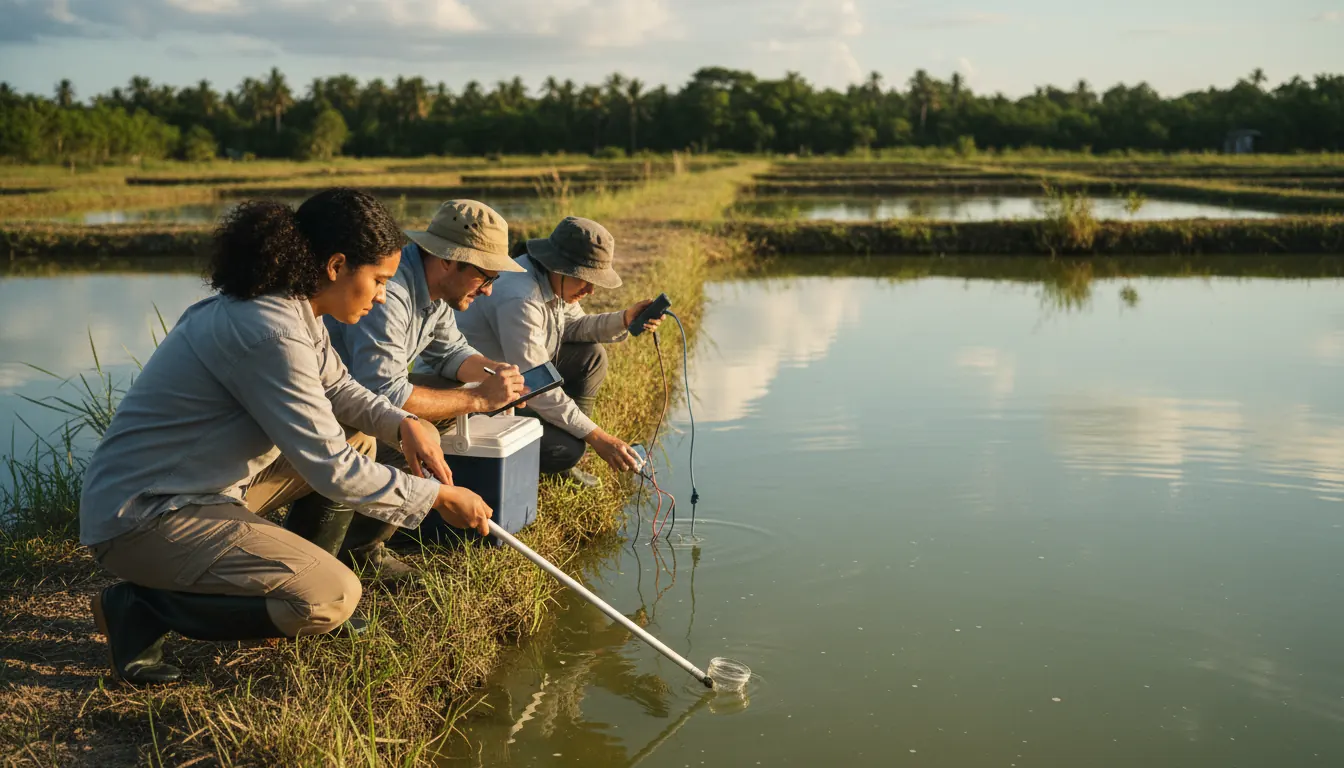
The practical challenge of conducting research inside operating farms — where production schedules take precedence over experimental convenience — shaped the methodological approach throughout the project. Standardisation was necessary but had to be built around what farms could realistically accommodate.
Comparative Overview of Aquaponics and Conventional Production Systems
Central to the project's analytical work was a structured comparison of production systems across dimensions that certification bodies and farm operators both care about. The table below draws on parameters documented within the ECOFISH research framework:
| System Type | Water Recirculation Rate | Organic Certification Compatibility | Yield Efficiency | Regional Applicability |
|---|---|---|---|---|
| Conventional Pond Farming | Low (10–30%) | Generally incompatible | Moderate | Temperate and tropical zones |
| Recirculating Aquaculture System | High (90–99%) | Compatible with adaptation | High | Broad, technology-dependent |
| Aquaponics (Fish + Plant Integration) | Very High (95–99%) | Strongly compatible | High (dual-output) | Moderate — infrastructure required |
| Organic Pond Systems | Moderate (30–60%) | Compatible with certification | Moderate to High | Predominantly temperate |
Aquaponics emerges from this comparison as the most organically compatible system — though the infrastructure demands are real, and deployment without institutional support is not straightforward for smaller operations.
Organic Certification Standards and Their Application to Aquaculture Farms
EU Council Regulation (EC) No 834/2007 remains the primary reference point for organic aquaculture certification within Europe, covering stocking density, feed composition, veterinary inputs, and environmental impact across the production cycle. The ECOFISH aquaponics model was developed with these parameters in view. Closed-loop integration of fish and plant cultivation addresses several certification requirements simultaneously — not as a workaround but as a structural feature of how the system functions, which is a meaningfully different proposition from retrofitting compliance onto an existing conventional setup.
Monitoring and Data Collection Protocols in Aquaculture Research
Water quality, fish health indicators, plant output, and energy consumption were tracked at standardised intervals across all four pilot regions throughout the project period. The value of this longitudinal design was its ability to separate noise from signal — distinguishing seasonal or site-specific variation from patterns attributable to system design choices. That distinction matters considerably when trying to produce aquaculture research findings that are actionable rather than merely descriptive.
Outcomes and Good Practices from the ECOFISH Aquaponics Model
Research programmes produce findings; the harder question is whether those findings change anything at the farm level. For the ECOFISH initiative, the answer depended substantially on how outputs were packaged and communicated to operators who had neither the time nor the institutional context to interpret academic publications directly.
Environmental Benefits Recorded Across Sustainable Fish Farms
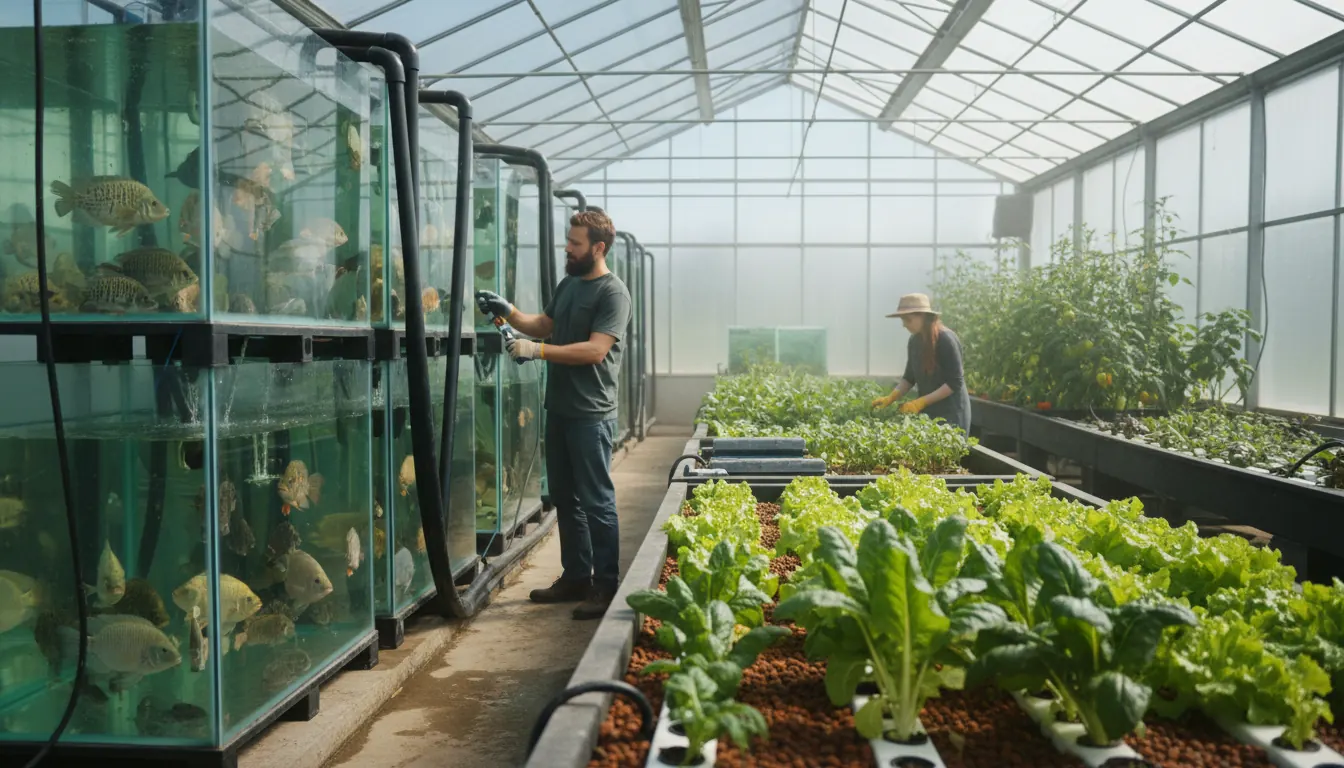
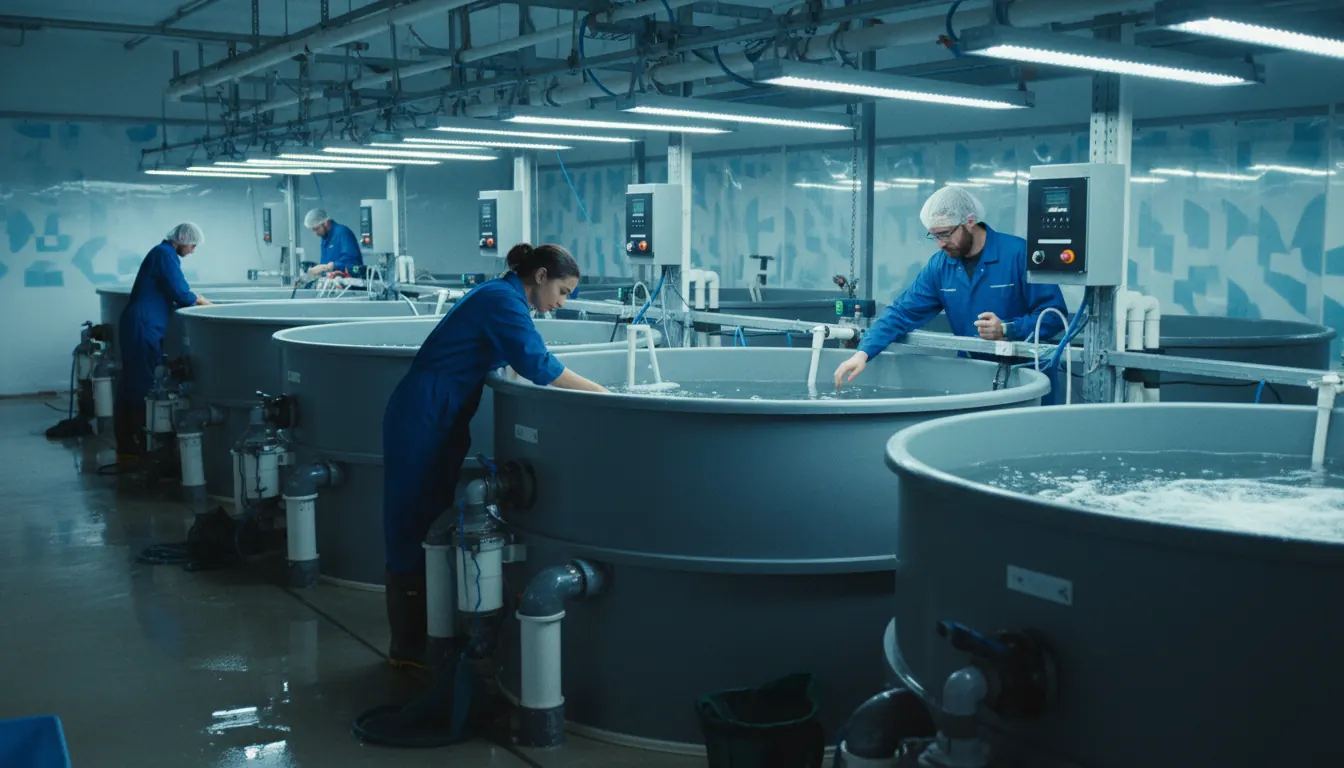
Water consumption per kilogram of fish produced fell noticeably in recirculating and aquaponics-based pilot systems relative to conventional pond baselines. Feed conversion ratios improved where feeding regimes were adjusted in line with project protocols. The dual-output character of aquaponics — fish protein and plant matter produced within the same system — generated efficiency gains that single-species operations structurally cannot replicate, regardless of how well those operations are managed within their existing parameters.
The dual-output nature of aquaponics systems, producing both fish protein and edible plant matter, was found to improve overall resource efficiency in ways that single-species systems cannot replicate — a finding consistent across all four ECOFISH pilot regions.
Recommended Transition Steps for Conventional Aquaculture Fish Farms
The transition pathway documented under grant No. 645691 is not a rigid sequence, but the following ordering reflects the operational logic observed across pilot sites:
- Baseline audit — quantify current inputs, water consumption, waste outputs, and certification status before any system changes are made.
- Early engagement with a certification body — understanding what documentation will be required throughout the transition avoids costly retroactive record-keeping.
- System redesign in consultation with specialists — water recirculation, feed reformulation, and stocking density reductions need to be planned together, not sequentially.
- Phased pilot implementation — running the new system alongside existing production limits financial exposure during the period when operational learning curves are steepest.
- Staff training — revised monitoring protocols and aquaponics-specific biological knowledge need to be embedded at the farm level, not held only by external consultants.
- Systematic documentation — audit-ready records throughout the transition serve both certification and research purposes.
- Evaluation and scaling decision — after a full production cycle, the documented data should drive the choice between full conversion, hybrid operation, or a revised pilot.
Policy Implications for the Broader Aquaculture Research Community
At the EU policy level, the project's outputs have fed into discussions about whether aquaponics systems warrant distinct certification treatment rather than being assessed against frameworks designed primarily for soil-based organic agriculture. The environmental profile of a well-operated aquaponics system differs enough from both conventional aquaculture and organic pond farming that applying the same regulatory instruments to all three produces anomalies that certification bodies are increasingly being asked to address.
Fish and Casino — Convergences Between Aquaculture Risk Modelling and Gaming System Design
The connection between aquaculture fish farming and casino operations is not intuitive, and it is worth being precise about what the parallel actually is — because it is a real one, not a rhetorical convenience.
Probabilistic Thinking in Aquaculture Fish Farming and Casino Operations
A fish farm's expected output is always a distribution, not a number. Water temperature shifts, disease pressure, feed quality variation — these interact in ways that make point forecasts unreliable guides for operational decisions. Experienced farm managers account for this by managing across scenarios rather than optimising for a single expected outcome. An online casino's game design operates on exactly the same logic: individual sessions are unpredictable, but the statistical properties of outcomes across thousands of sessions are knowable and plannable. The fish and casino parallel, at this level, is a description of how probability-literate operators manage systems where variance is structural rather than incidental.
Shared Analytical Principles Applied Across Both Domains
Examined closely, aquaculture fish farming and casino system management share more operational DNA than either sector typically acknowledges:
- Variance management — distinguishing between normal fluctuation and structural underperformance requires the same analytical discipline in both contexts; acting on noise is costly in both.
- Resource allocation under uncertainty — water, feed, and stocking capacity in aquaculture; operational budgets and game mix in casino management — both require portfolio thinking rather than single-outcome optimisation.
- Forecasting from historical data — production cycle records in fish farming and session outcome databases in casino operations serve the same function: reducing the uncertainty attached to forward-looking decisions.
- Adaptive operational response — when environmental conditions shift, whether that is a disease outbreak or a regulatory change affecting permitted game mechanics, resilient operators adjust parameters rather than absorbing the impact passively.
- Verifiable accountability structures — organic certification audit trails and gaming authority compliance documentation are structurally similar: both require contemporaneous records that can withstand third-party review.
- Long-horizon sustainability logic — the ecofish project was built on the premise that extraction-maximising approaches in conventional aquaculture undermine the conditions for long-term viability. Regulated online casino environments operate under the same institutional reasoning: operators who erode user trust or circumvent protective frameworks damage the sector's licence to operate.
Responsible Frameworks in Online Casino Environments as a Reference for Institutional Governance
The governance architecture that has developed around regulated online casino markets — covering responsible gambling tools, return-to-player transparency, and independent audit requirements — represents a mature institutional response to managing complex probabilistic systems accountably. That architecture did not emerge easily or quickly, and aquaculture certification frameworks navigating the challenge of accommodating new production technologies without compromising standard integrity can reasonably look to it as a comparative reference, if not a direct model.

Regional Spotlights and the Future of Aquaculture Farms
Whether the ECOFISH project's findings produce lasting sectoral change depends on uptake well beyond the original programme boundaries — by operators, certification bodies, and research institutions that had no direct involvement in the work.
Performance Indicators Across ECOFISH Pilot Sites
The following table draws on outcomes documented across the four primary pilot locations under the Horizon 2020 funding framework:
| Pilot Location | Primary Species | System Tested | Organic Status | Primary Outcome |
|---|---|---|---|---|
| Romania | Common Carp | Organic Pond Conversion | Partial certification achieved | Stocking density reduction improved water quality indices |
| Spain | Sea Bass / Sea Bream | Aquaponics Integration | Full certification pathway initiated | Dual-output model demonstrated commercial viability |
| United States | Tilapia | Recirculating Aquaculture System | Aligned with USDA Organic criteria | RAS efficiency exceeded conventional baseline by 34% |
| Egypt | Tilapia / Catfish | Modified Pond Systems | Pre-certification documentation completed | Feed reformulation cut chemical input dependency by over 40% |
The breadth of conditions represented here — across climate, species, regulatory regime, and market structure — is precisely what gives the findings their claim to generalisability, as documented under grant No. 645691.
Prospects for Scaling Sustainable Aquaculture Fish Farming Globally
The technical case for scaling aquaponics-based and organic production systems is well-supported by the project's data. What the evidence from the ecofish project also shows, perhaps less comfortably, is that the technical barriers are in most cases the easier ones to clear. Financing structures, regulatory recognition of new system types, and market access for certified products present more persistent friction — and resolving those requires sustained policy engagement of a kind that sits at the edge of what a research programme can deliver on its own.
Conclusion
The ECOFISH project generated something more useful than optimism about sustainable aquaculture — it generated documented, regionally diverse evidence about what transition actually looks like when it is attempted under real operational conditions. Funded under Horizon 2020 through Marie Skłodowska-Curie grant No. 645691, and active across Romania, Spain, the United States, and Egypt, the ecofish project produced findings grounded in the specifics of different farm types rather than in generalised best-practice frameworks.
The convergence explored in this article between aquaculture fish farming and online casino operational logic — the fish and casino parallel — points toward a less obvious but durable insight: that the analytical tools needed to manage complex, probabilistic, accountability-driven systems are more transferable across sectors than institutional boundaries typically suggest. Both sustainable fish farms and well-governed online casino environments ultimately succeed or fail on the same terms — the quality of the evidence they collect, the rigour of the decisions they make from it, and the durability of the accountability structures they operate within.
FAQ
- Why are fish farms good?
- Fish farms decouple fish protein supply from the state of wild fish populations, which are under pressure across most major marine regions. Well-managed aquaculture fish farms can produce protein with substantially lower land and water footprints than most terrestrial livestock systems, and organic or aquaponics-based operations reduce the chemical inputs that have historically made intensive fish farming environmentally contentious.
- Why are fish farms important?
- Wild capture fisheries are operating at or near sustainable limits across a significant proportion of assessed stocks. Aquaculture farms absorb demand growth that those fisheries cannot safely accommodate — making them a structural component of food security planning rather than simply a commercial alternative to wild-caught product.
- How do fish farms work?
- Species are cultivated in controlled environments — ponds, tanks, cages, or recirculating systems — with managed feeding, water quality, and stocking density throughout the growth cycle. Sustainable systems replace synthetic inputs with biological and mechanical alternatives and use closed-loop water management to minimise environmental discharge, as the aquaculture research conducted under the ECOFISH programme documented in detail across four regional contexts.
- What is fish in gambling?
- Within poker communities and certain online casino contexts, "fish" refers informally to players whose decision-making is statistically disadvantageous to their own outcomes — typically newer or less analytically rigorous participants. Separately, the term has come to describe a category of arcade-style table games, originating in Asian gaming markets, that have found a place in online casino platforms across several regulated jurisdictions.
- What is the fish game?
- Fish table games are multiplayer shooting-style games in which players target fish of varying point values moving across a shared screen, accumulating credits or prizes based on successful captures. They blend elements of skill and chance in proportions that vary by implementation, which has led different licensing bodies to classify and regulate them in different ways — some treating them as games of skill, others as gambling products.
- Are fish games gambling?
- Under most established licensing frameworks, yes. Where a game involves real-money wagering on an outcome containing a material element of chance from which a monetary prize can be won, it falls within the standard definition of gambling. Regulators in the United Kingdom, Malta, and comparable jurisdictions generally apply that classification to fish table games, bringing them within consumer protection and responsible gaming requirements accordingly.